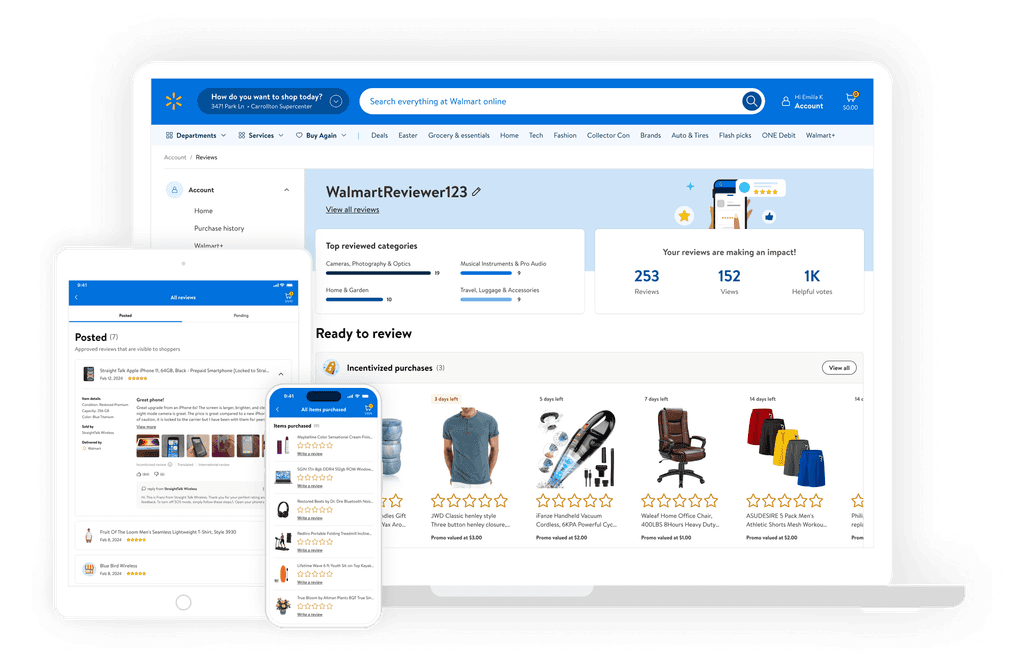
Walmart eCommerce –
Creating a Reviewer Profile to Drive Engagement and Impact
Centralizing and gamifying reviews to boost participation and quality.
Problem
Business Problem
Review submissions had a 1–2% conversion rate, well below the 5–6% industry benchmark due to low volume.
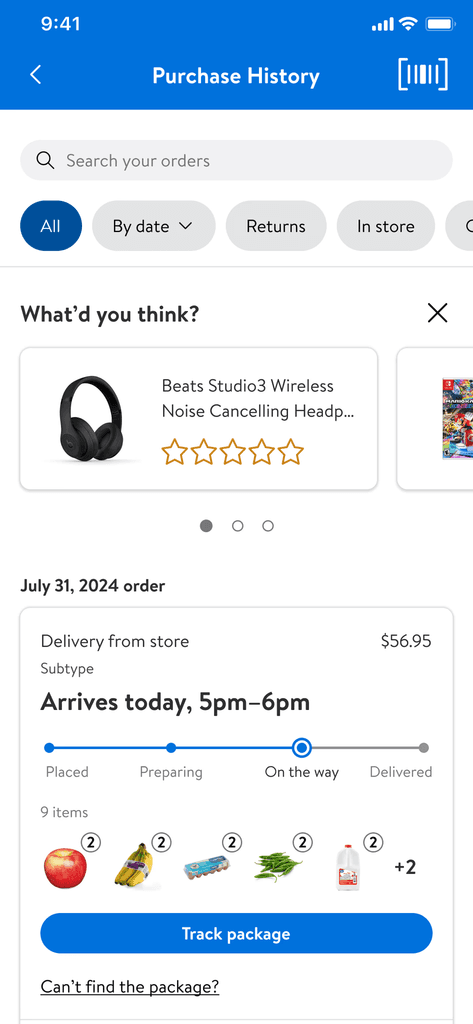
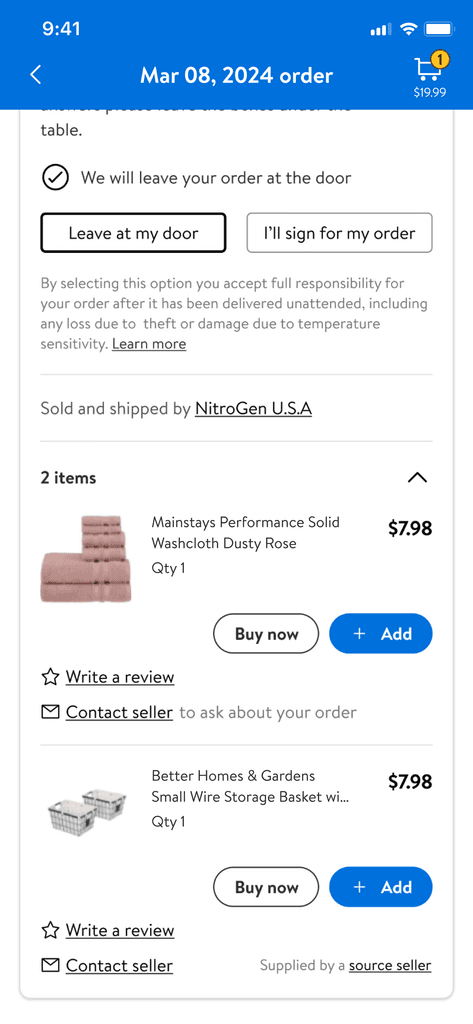
Entry points were buried in Purchase History, requiring multiple clicks with no direct submission from item pages, limiting participation.
User Problem
Shoppers hesitated to write reviews due to unclear feedback, lack of acknowledgment, and fragmented entry points.
Without a way to track submissions, users felt unmotivated, reducing engagement and review volume.
User Need
An intuitive way to submit and track reviews, fostering a sense of value and encouraging thoughtful, detailed contributions.
How Might We…
Create a transparent, rewarding review experience that drives participation and improves review quality?
Problem to solve
Reviewer participation rates are lower than industry standard due to lack of recognition and ease of discoverability, which lowers motivation for reviewers.
Research & Discovery
Competitive analysis
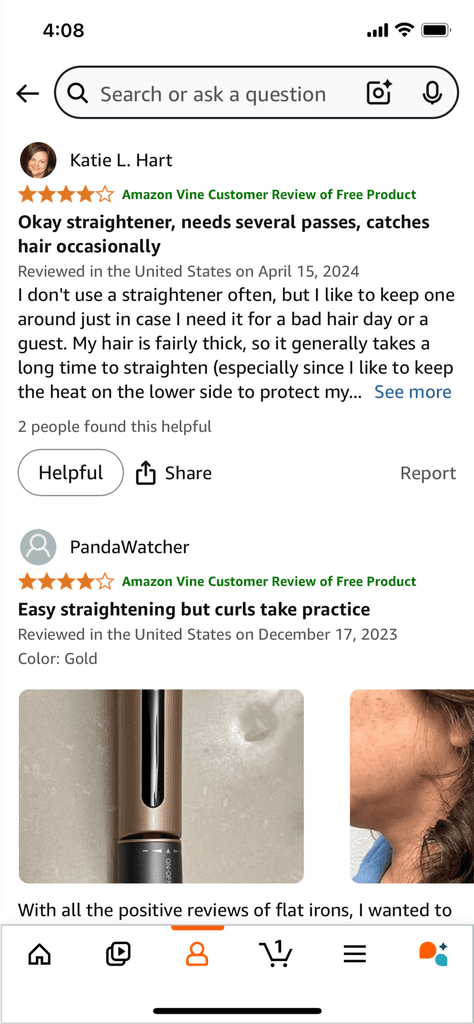
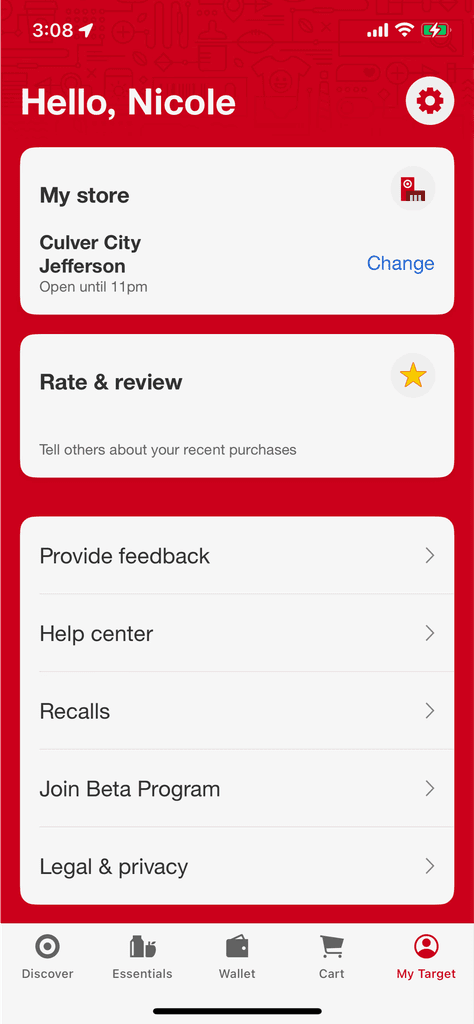
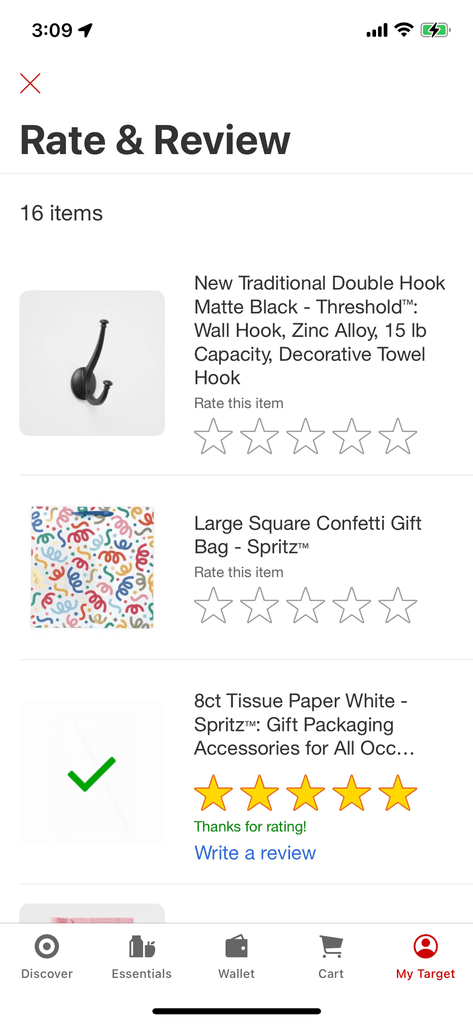
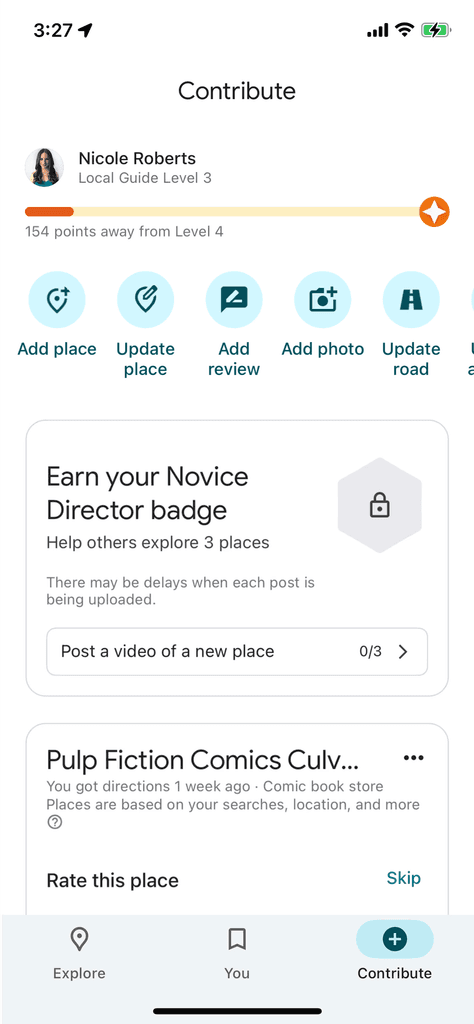
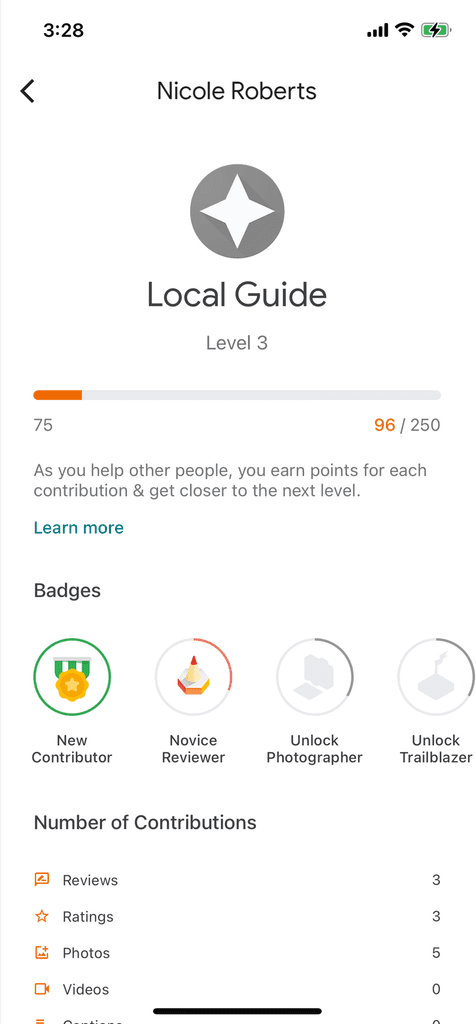
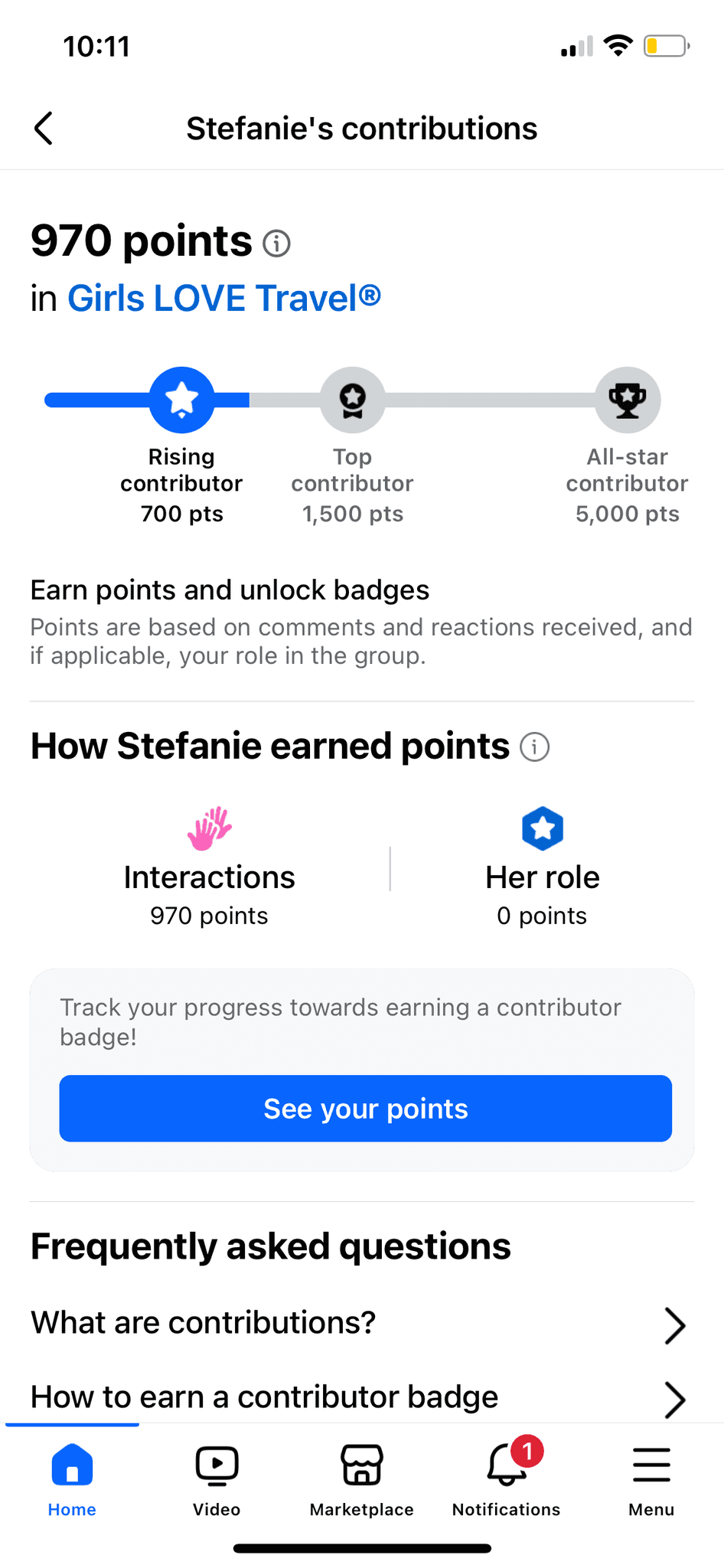
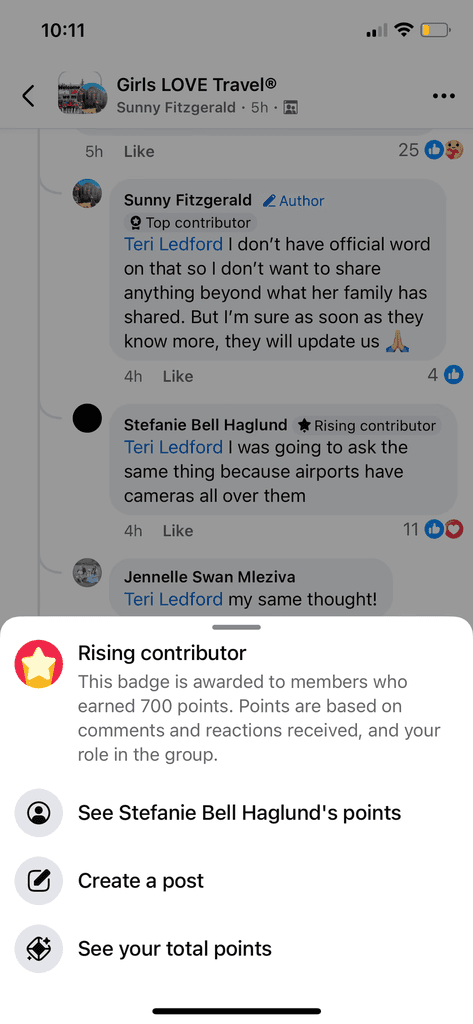
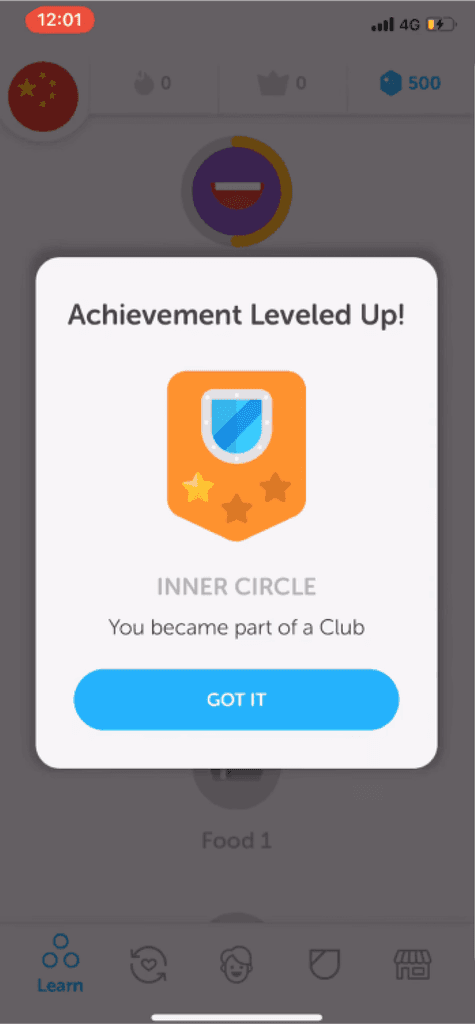
I studied 20 platforms to identify best practices for motivation, acknowledgment, and discoverability.
1
Motivation
Low review submission rate of 1-2% compared to the market benchmark of 5-6%.
2
Acknowledgement
Reviewers don’t know if their submissions are approved or if they help or influence anyone.
3
Discoverability
No dedicated location to leave reviews, and key entry points are buried behind clicks.
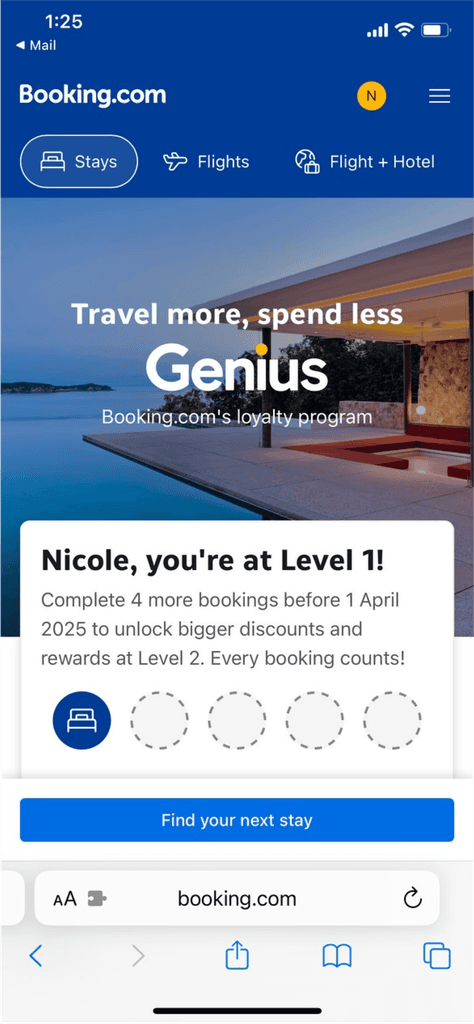
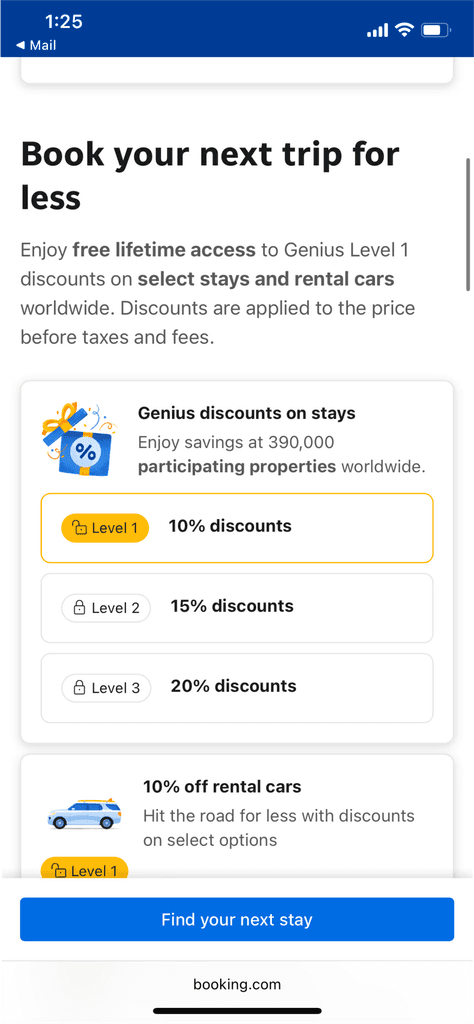
Booking.com
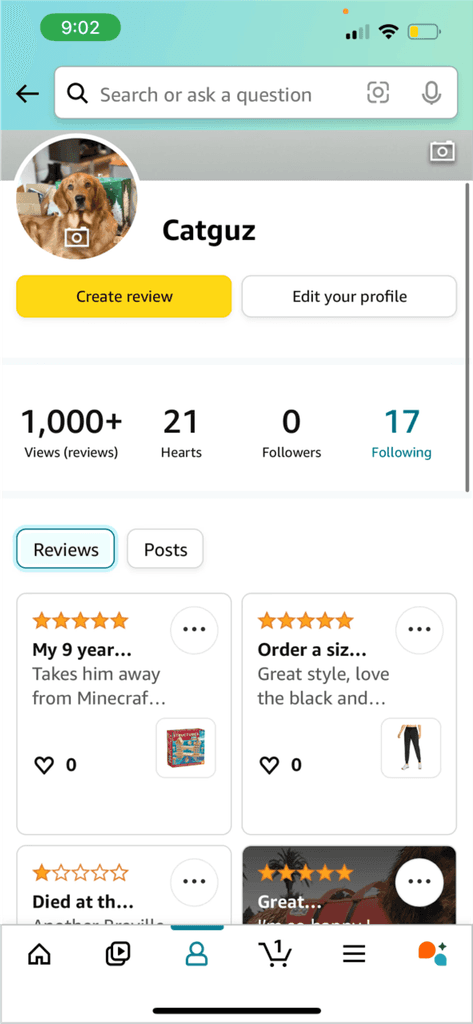
Amazon
Target
Google Local Guides
Facebook Groups
Duolingo
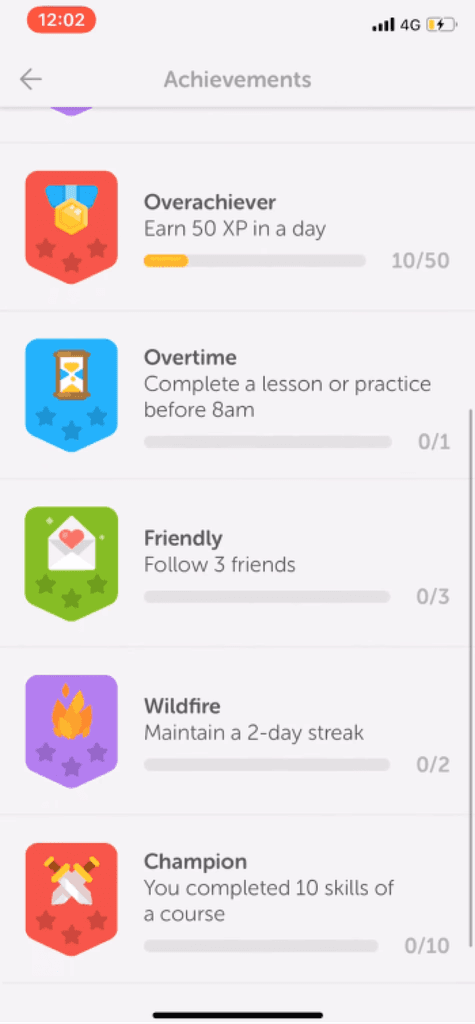
Addressing the user pain points
Our analysis revealed three critical needs: user motivation through gamification, clear feedback mechanisms, and intuitive entry points. These findings directly informed features like the review dashboard, gamified rewards, and streamlined flows.
1
Motivation
Recognize reviewer contributions with status.
2
Acknowledgement
Display review status and its provided impact.
3
Discoverability
Provide intuitive entry points to submit reviews.
Ideation
Developing concepts
Guided by research insights, I iterated on design directions to align with user needs and business goals. Principles like gamification, transparency, and motivation informed every aspect of the reviewer profile.
Feel my value
Show users their impact through multi-channel communications.
Make it fun
Use gamification to drive motivation and engagement.
Create transparency
Provide tools for users to track reviews, status, and impact.
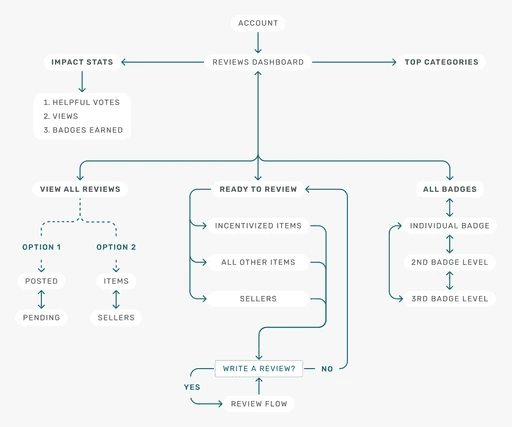
Mapping the review journey
Guided by these principles, I created a seamless user flow for review writing, tracking, and engagement:
Impact Stats: Highlight how reviews influence others to encourage contributions.
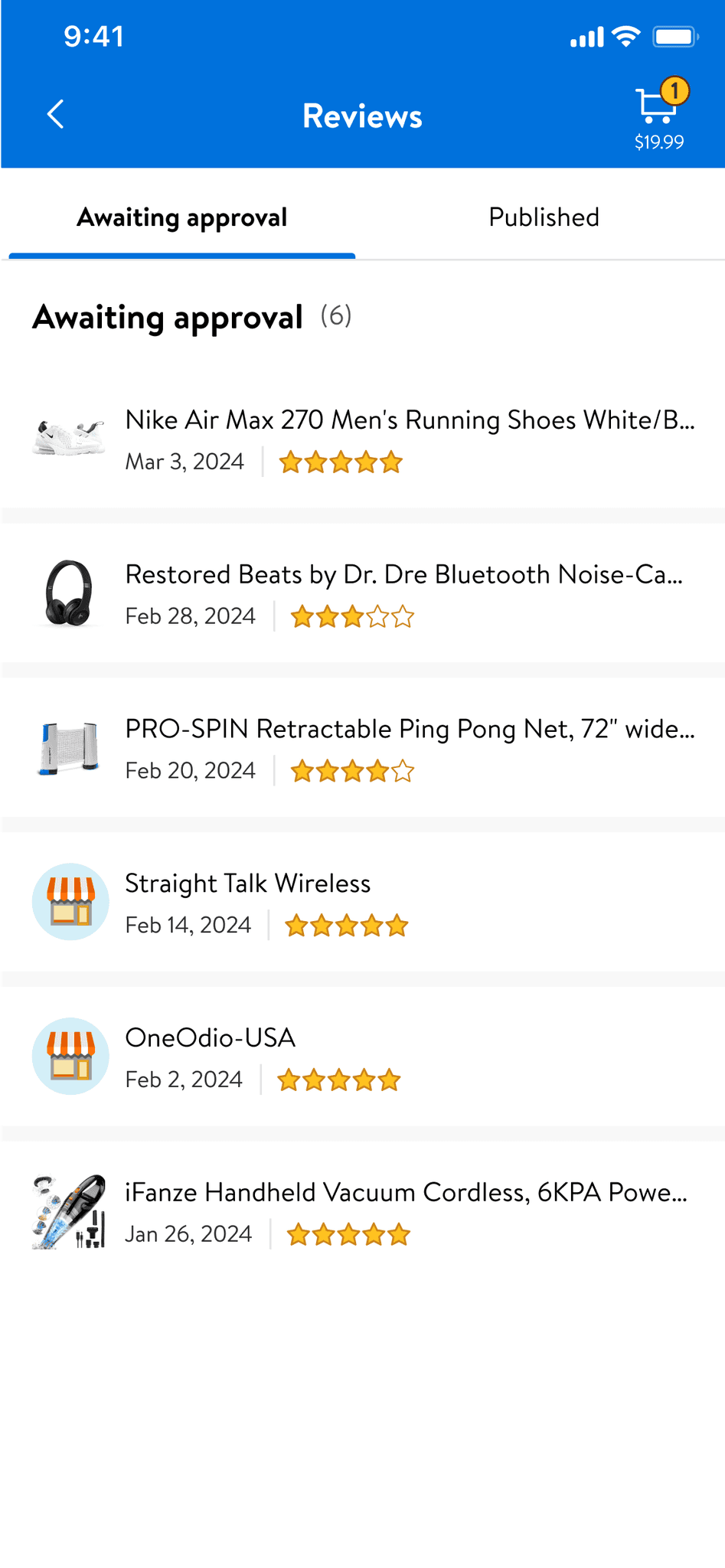
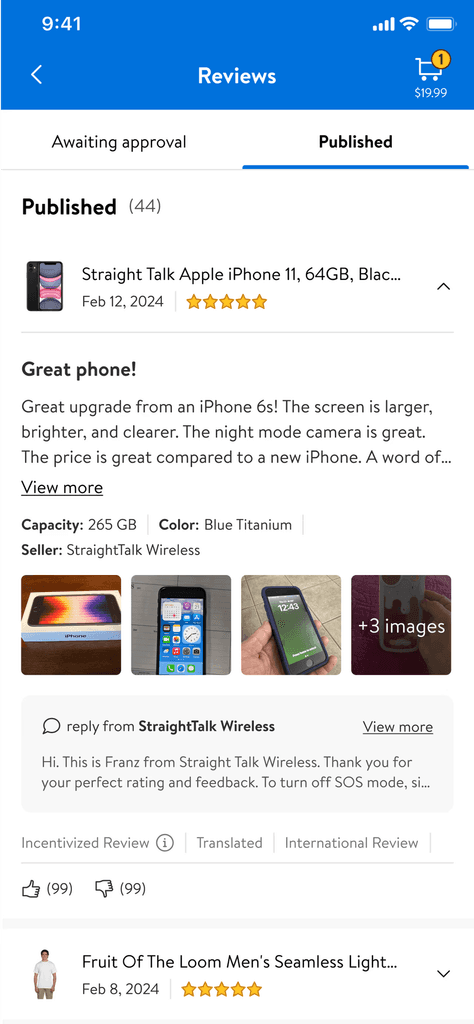
All Reviews: Centralize posted and pending reviews for easy tracking.
Ready to Review: Provide quick access to items needing reviews.
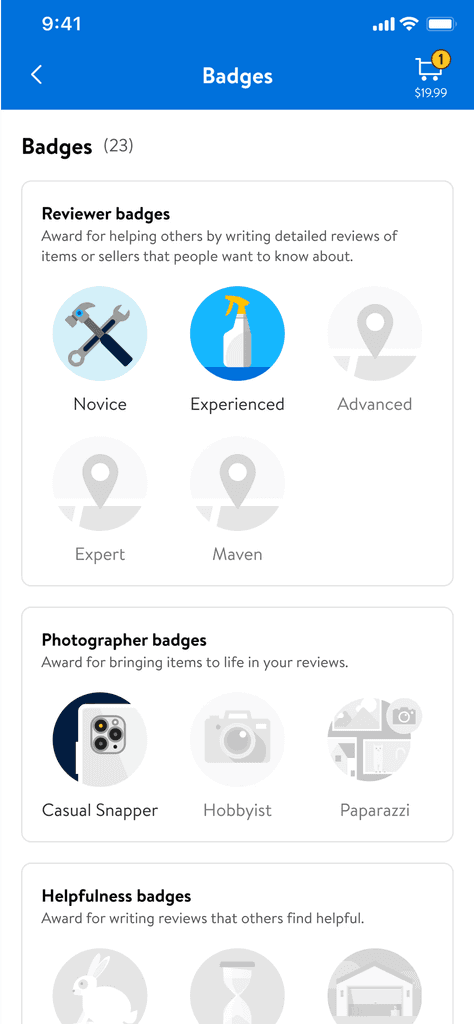
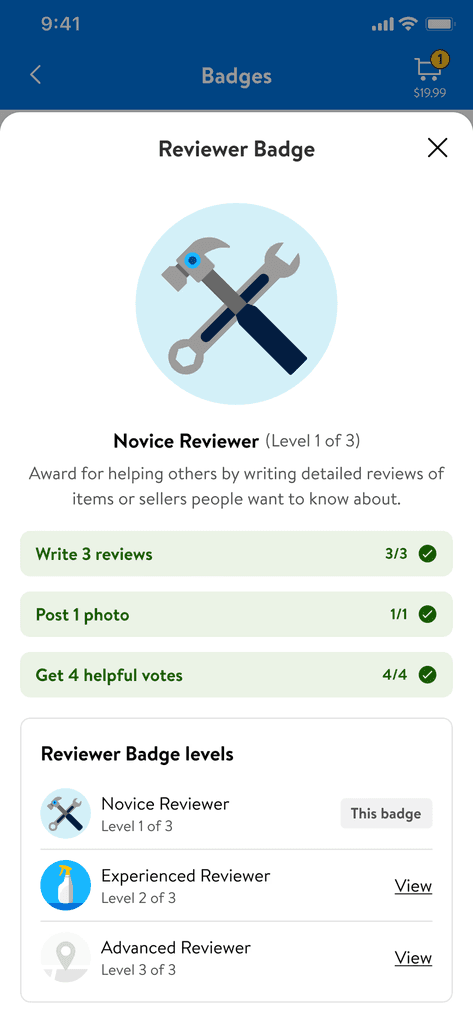
Badges: Reward participation with visual progress indicators.
Top Categories: Provide fun insights into users' review activity to boost engagement.
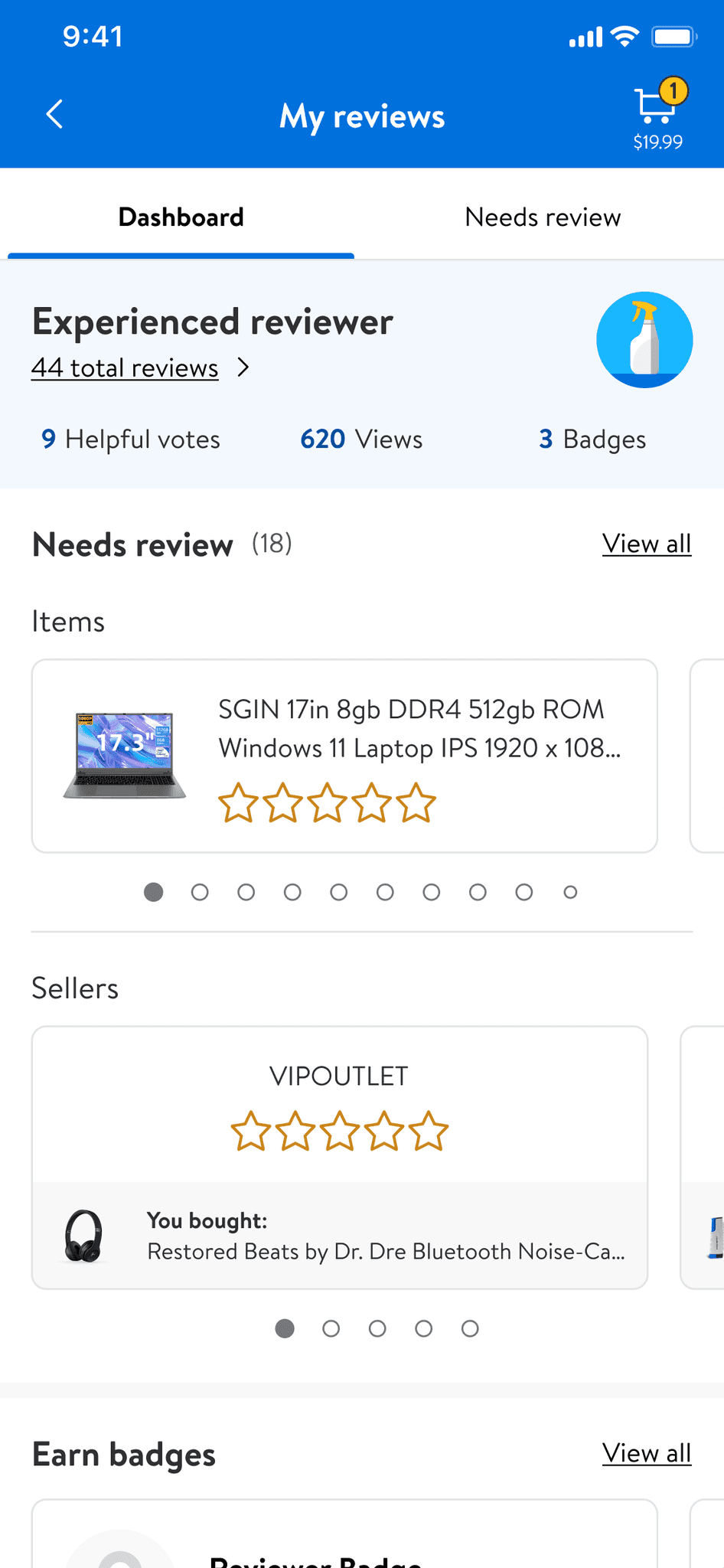
Dashboard
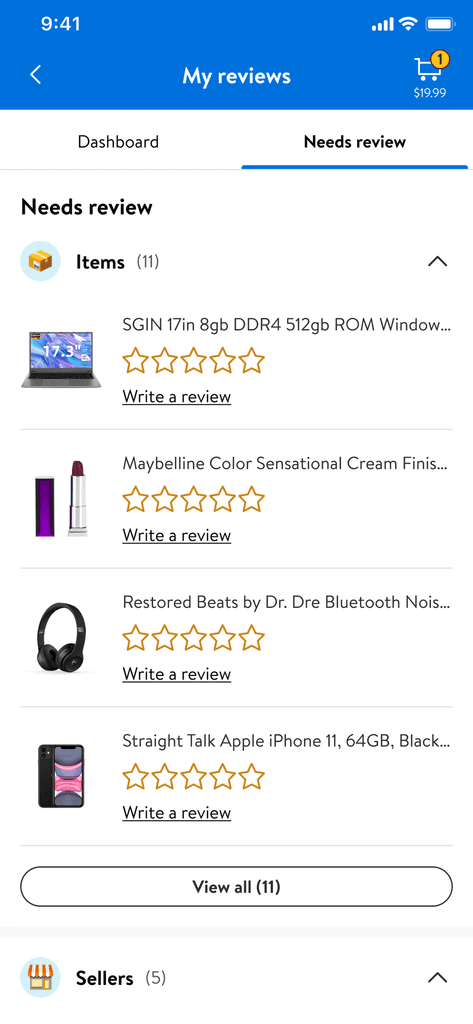
needs reviews
awaiting approval
published
all badges
all badges
user testing
Combining initiatives
The two teams recognized that the Reviewer Profile and Sampling Program needed to coexist in the same space, requiring alignment for clarity and usability.
Methodologies used
We explored how to merge the Reviewer Profile and Sampling Program into one cohesive experience.
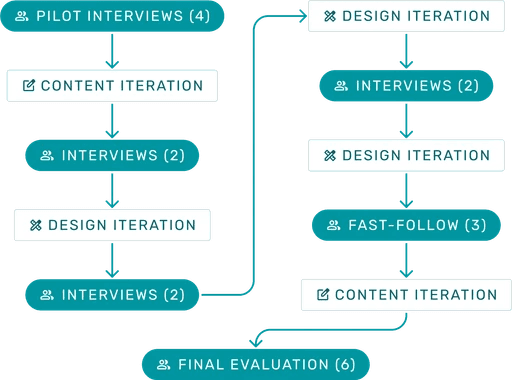
With Jen Luong, our UX Research partner, we used a rapid and iterative testing approach:
Quick Unmoderated Testing: Comparing badges vs. points frameworks.
Traditional RITE Testing: Six in-depth interviews to refine concepts.
Fast-Follow Testing: Three unmoderated sessions for quick validation.
Final Evaluation: Six unmoderated sessions to confirm the final direction.
Determining a framework
We tested two frameworks to identify user preferences:
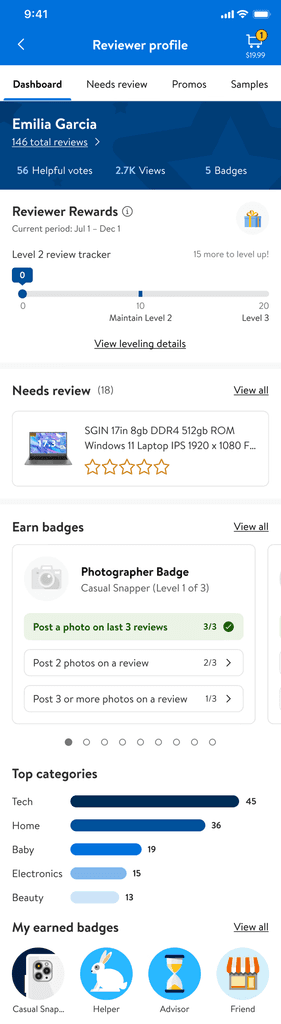
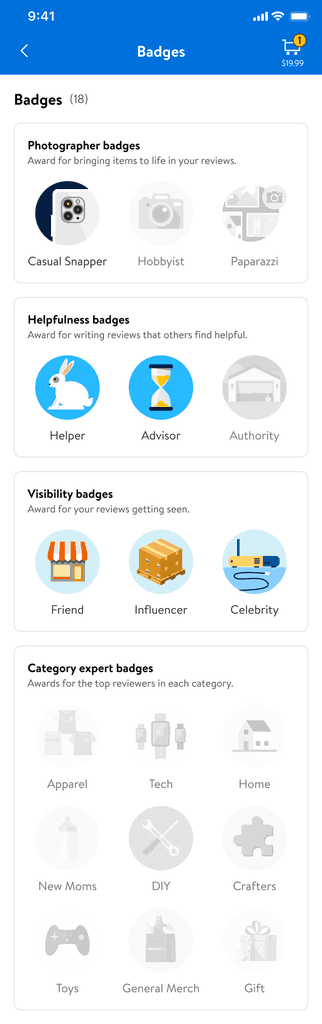
Badges
Users earn badges by completing tasks in specific categories.
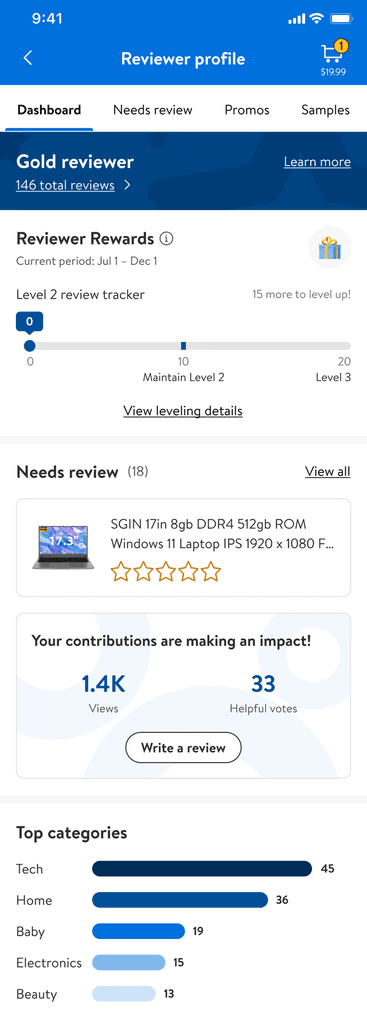
Points
Users earn points for reviews, progressing through defined levels.
natural behavior
"Is there a reason why there are so many badges? Point is more about reviewing the way you want to and earning that way.”
badges are complex
"I would say, I prefer the points. I think the badges are cool, but it doesn't necessarily give me as much value, and I think that at this point it becomes a little bit too complex."
Status is easily understood
"It motivates me more to be called a Gold Reviewer.... what are the benefits of a badge?”
A clear preference emerged
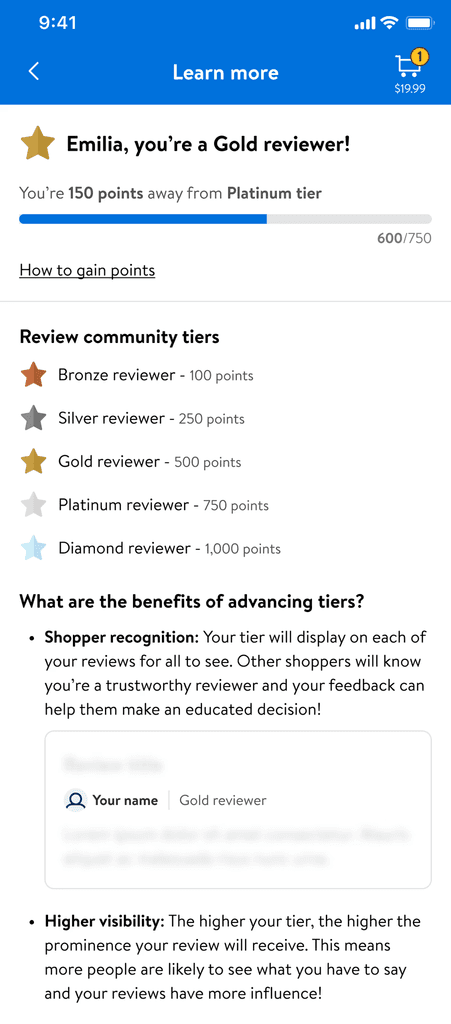
Users strongly preferred the points framework for its simplicity and intuitive design. Key reasons included:
Points align with users’ natural behavior.
Points are less complex than badges.
Status levels are intuitive and easy to understand.
This preference shaped the final design, focusing on simplicity and intuitive progression through points.
Insights from the sessions
Three drivers increase the likelihood of users leaving reviews:
Ease of Use: Simplify the process to align with natural behavior.
Awareness: Make review goals transparent and top of mind.
Recognition: Highlight user contributions with stats and impact.
ease of use
Users can leave reviews naturally, earning points through a simple tracking system.
Awareness
Provide goal transparency so reviewers understand levels and how to reach them.
Recognition
Show numbers, personal stats, and social proof to highlight impact.
recognition
Show how reviews drive change and ensure feedback is acknowledged.
The proposed design
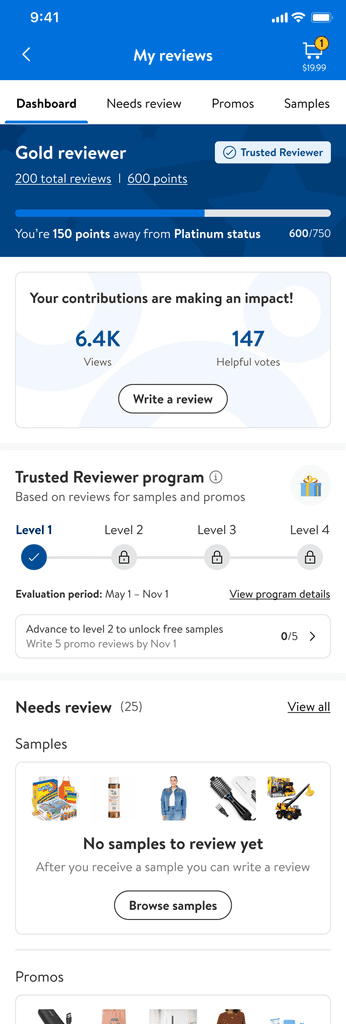
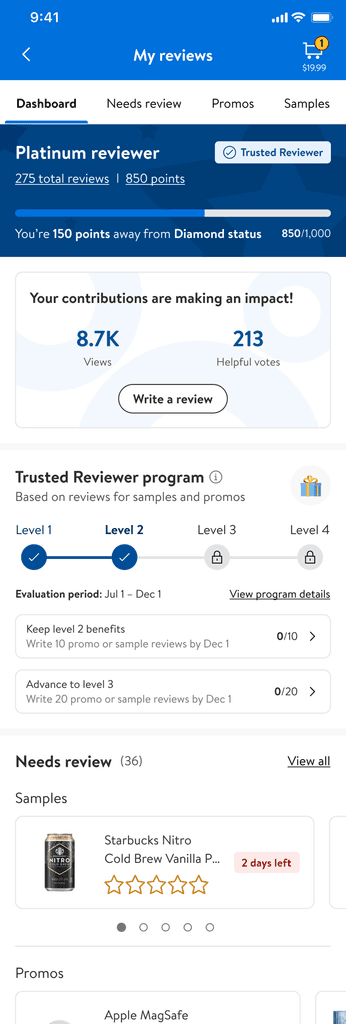
Extensive testing resulted in a cohesive design that merged the two programs with clarified functionality and interaction.
Dashboard
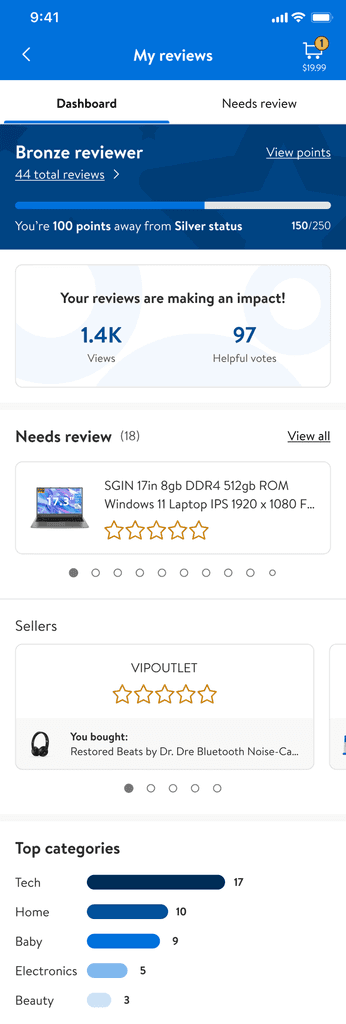
points system
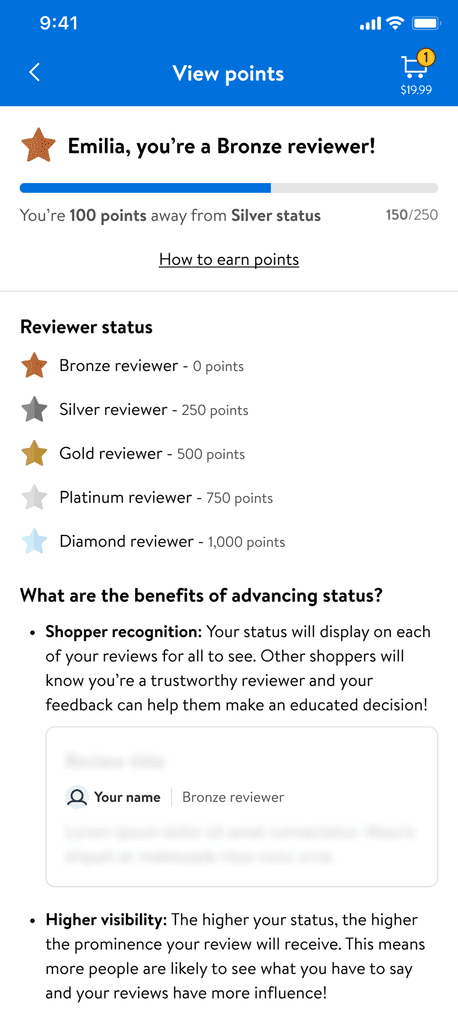
how to earn
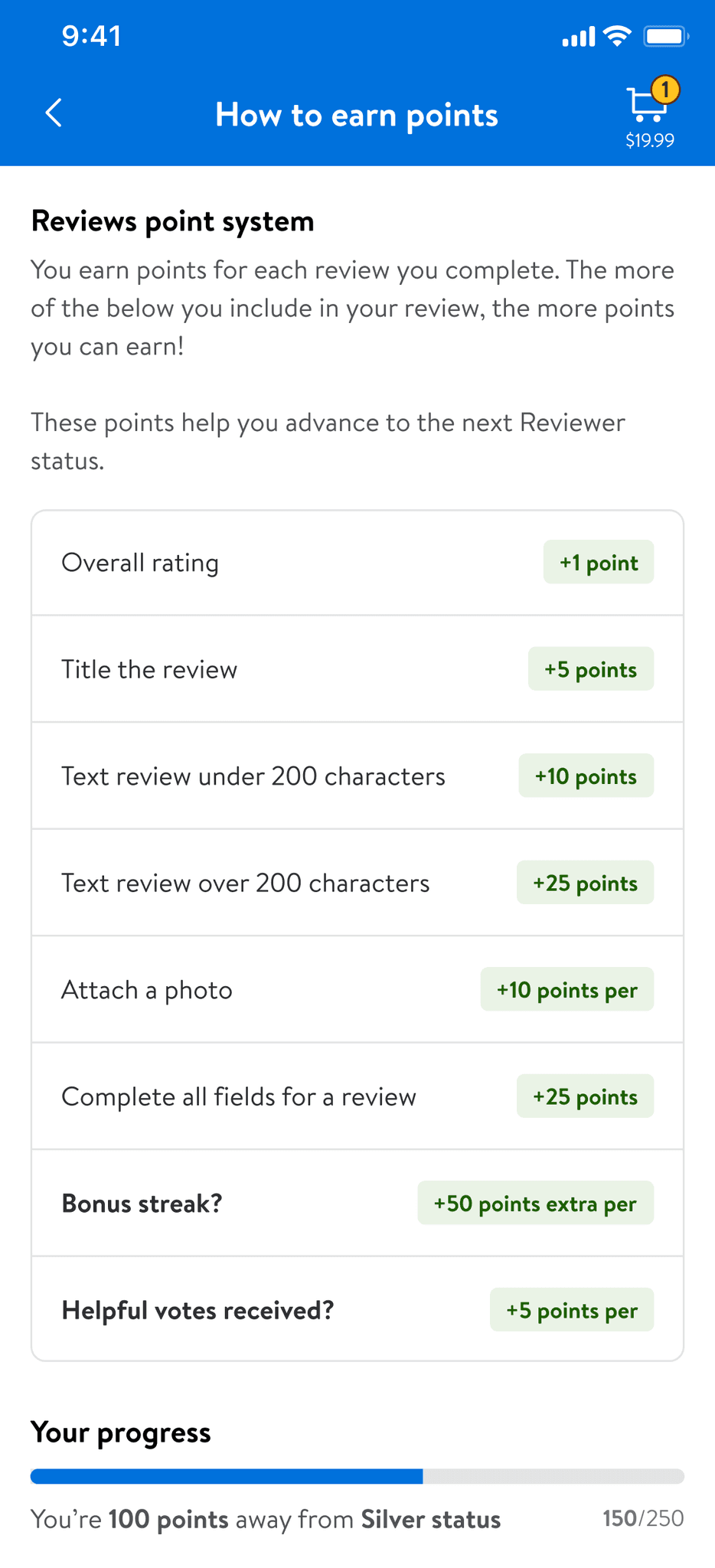
sampling - level 1
sampling - level 2
User Quote
"I'm definitely going to be a hundred percent more willing to leave review if this was in place."
FINAL APPROVAL
Presenting to leadership
After final refinements, the design needed to be presented to the Chief Design Officer before being handed off to developers.
An overview of the project
We chose the light color strategy to balance familiarity with innovation.
- Track submitted reviews (pending and posted).
- Earn points for contributions.
- Gain status and recognition.
- See the impact of their feedback.
The need for a pivot
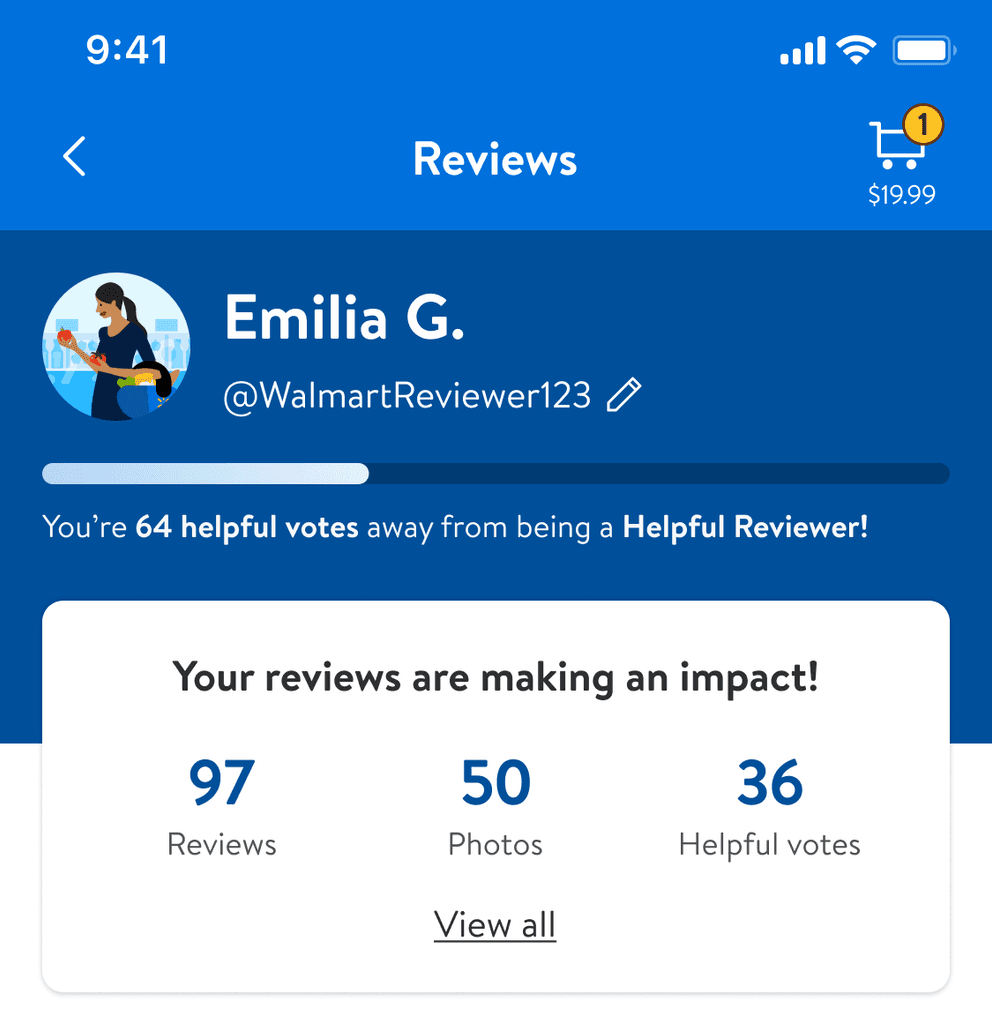
A new conflicting project required us to rethink our approach. We needed to find a way to motivate users and provide elevated status without relying on points or levels.
We explored four concepts:
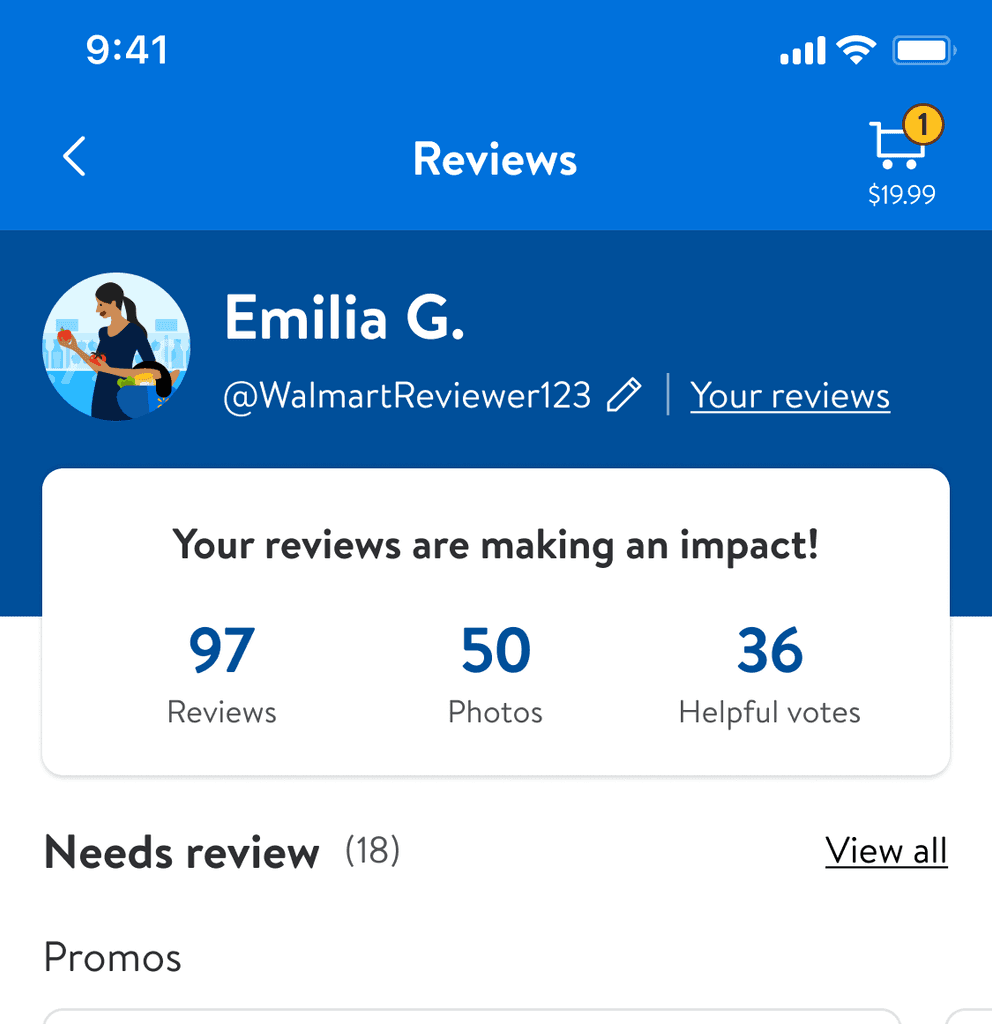
No Status: No status with a focus on overall impact.
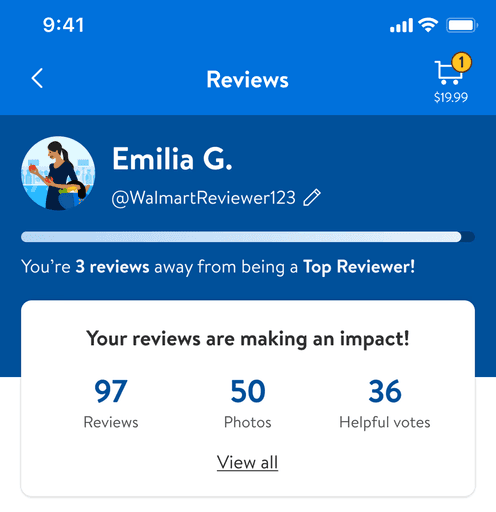
Top Reviewer: Status based on review contributions.
Helpful Reviewer: Status based on reviews with the highest impact.
Leaderboard: Competitive ranking based on overall activity.
no status
top reviewer
helpful reviewer
Leaderboard
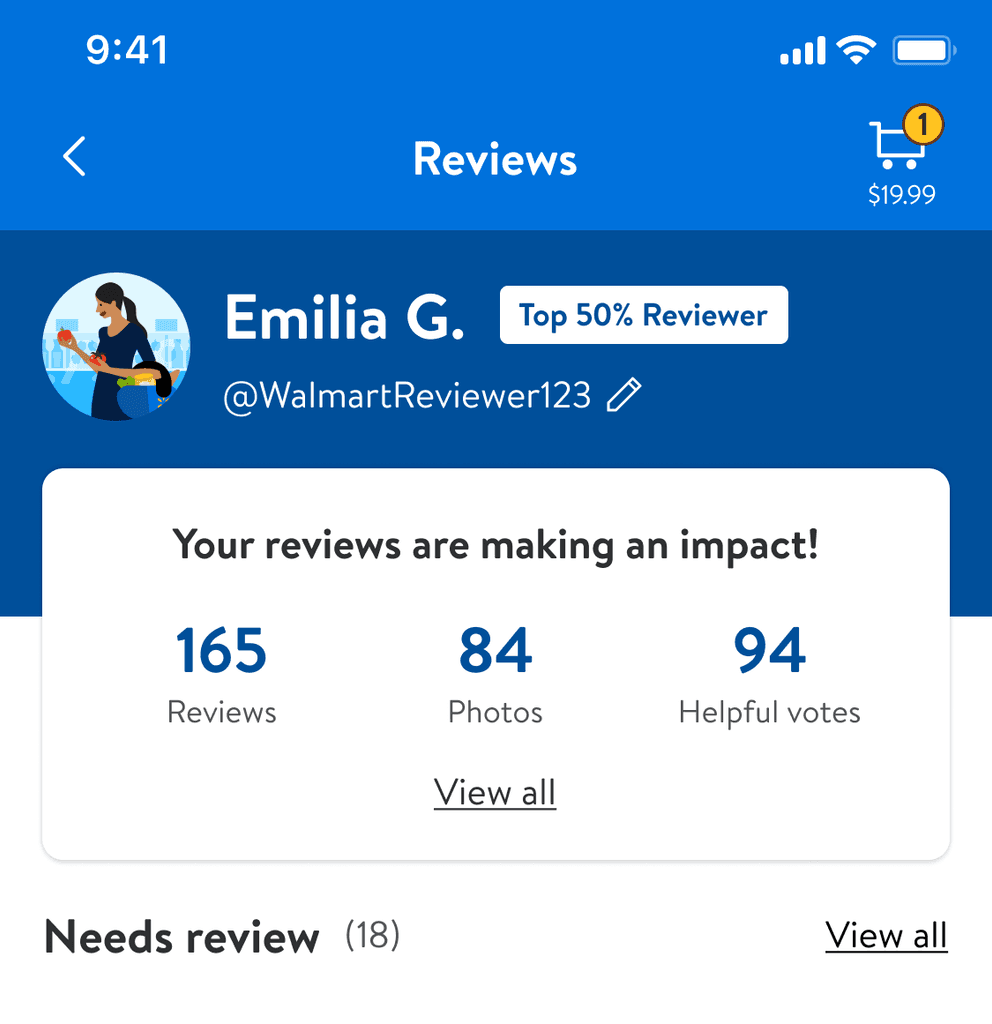
Final Design
The revised flow
The updated flow simplifies the Reviewer Profile, ensuring discoverability and paving the way for future gamification.
Item Page
Item summary
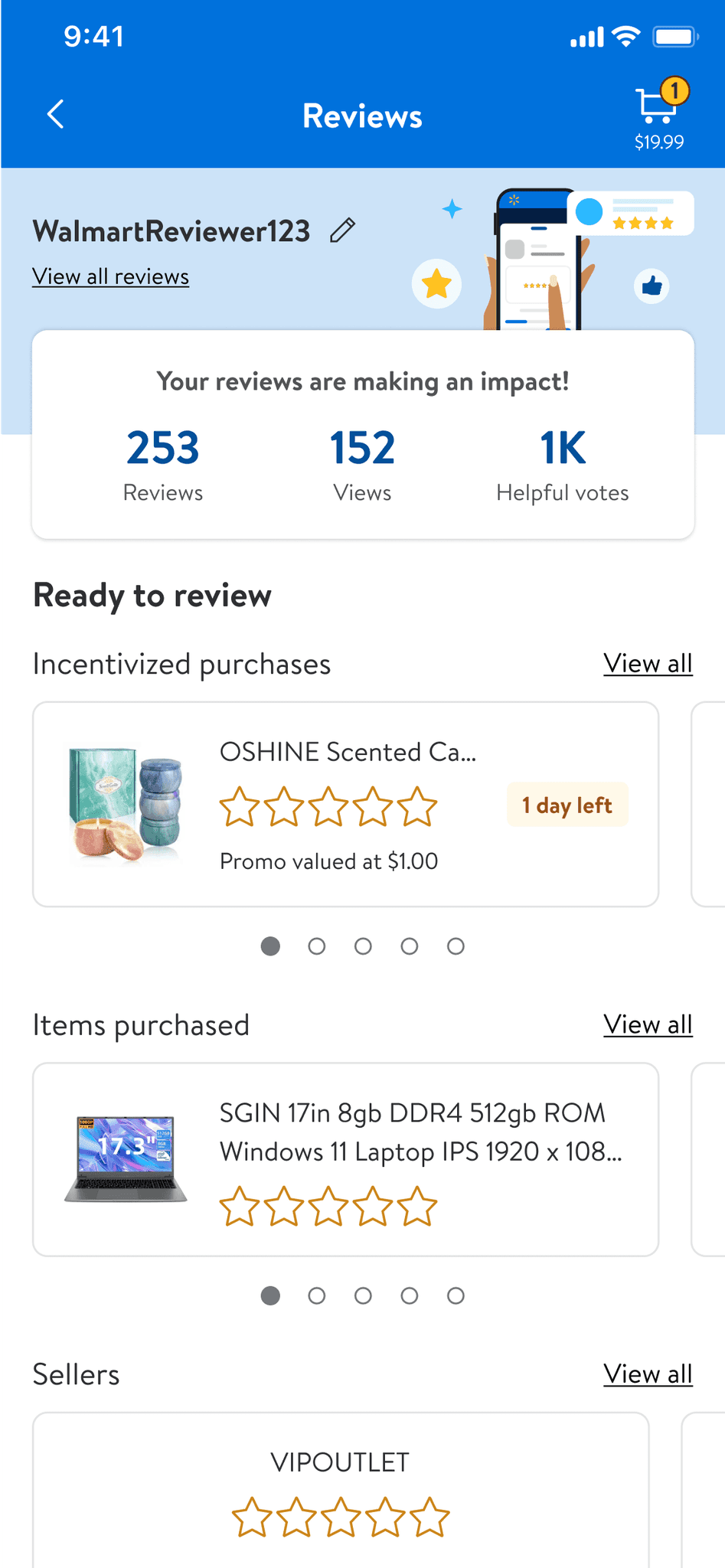
Dashboard header & impact module
The dashboard highlights user contributions with stats like views and votes, fostering a sense of accomplishment.
FEEL MY VALUE
Acknowledges the impact of reviews to encourage continued contributions.
why it matters
Users engage more when they see the value and impact of their feedback.
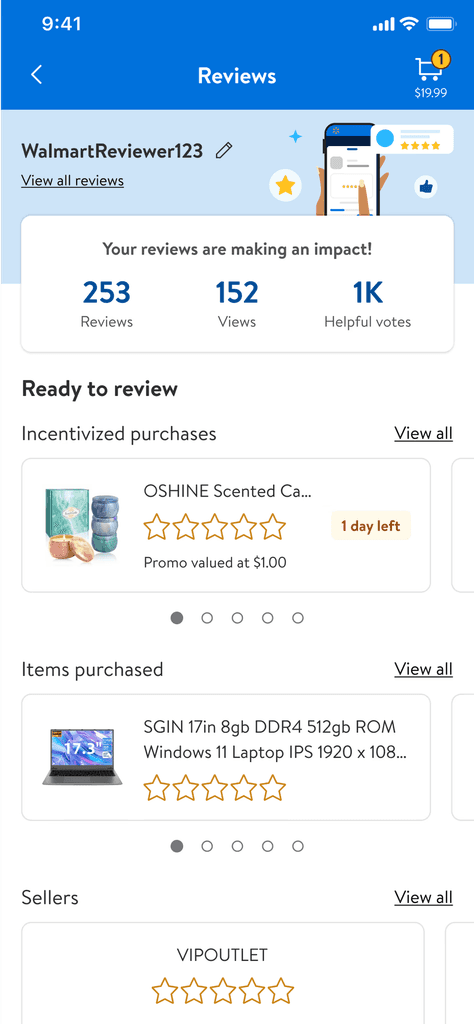
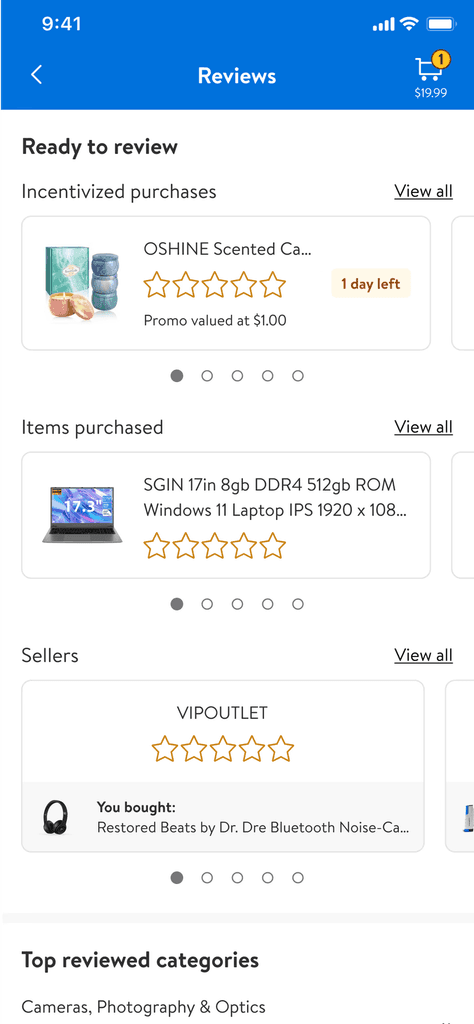
Ready to review carousels
Streamlined navigation reduces friction, encouraging more reviews.
Create transparency
Provide clear and intuitive entry points for different review categories.
why it matters
Reduces friction by placing review options front and center, guiding users seamlessly into the review flow.
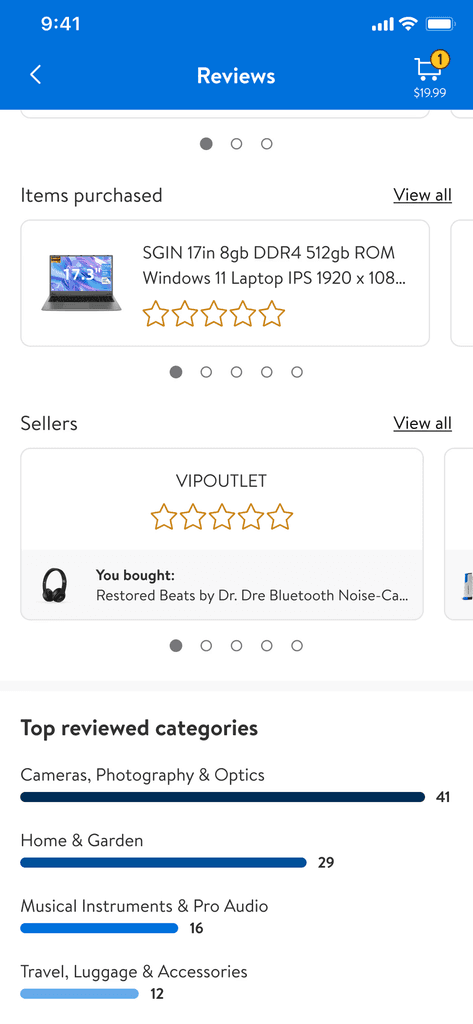
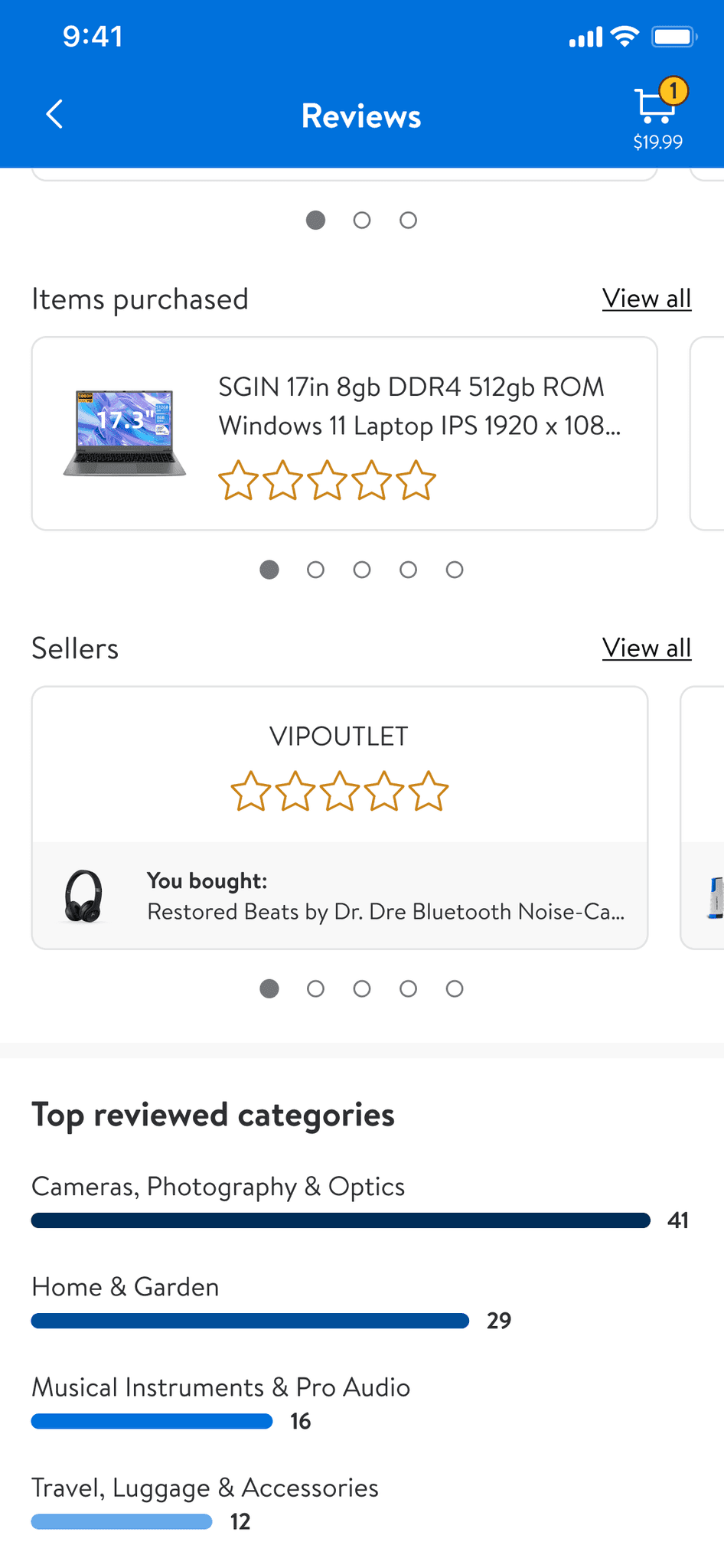
Top categories
Fun insights into user behavior encourage participation and set the stage for future gamification.
make it fun
Users enjoy discovering patterns in their reviewing habits.
why it matters
It fosters a deeper sense of investment and encourages repeat engagement.
Ready to review pages
Dedicated pages for review categories simplify the process of rating or writing feedback.
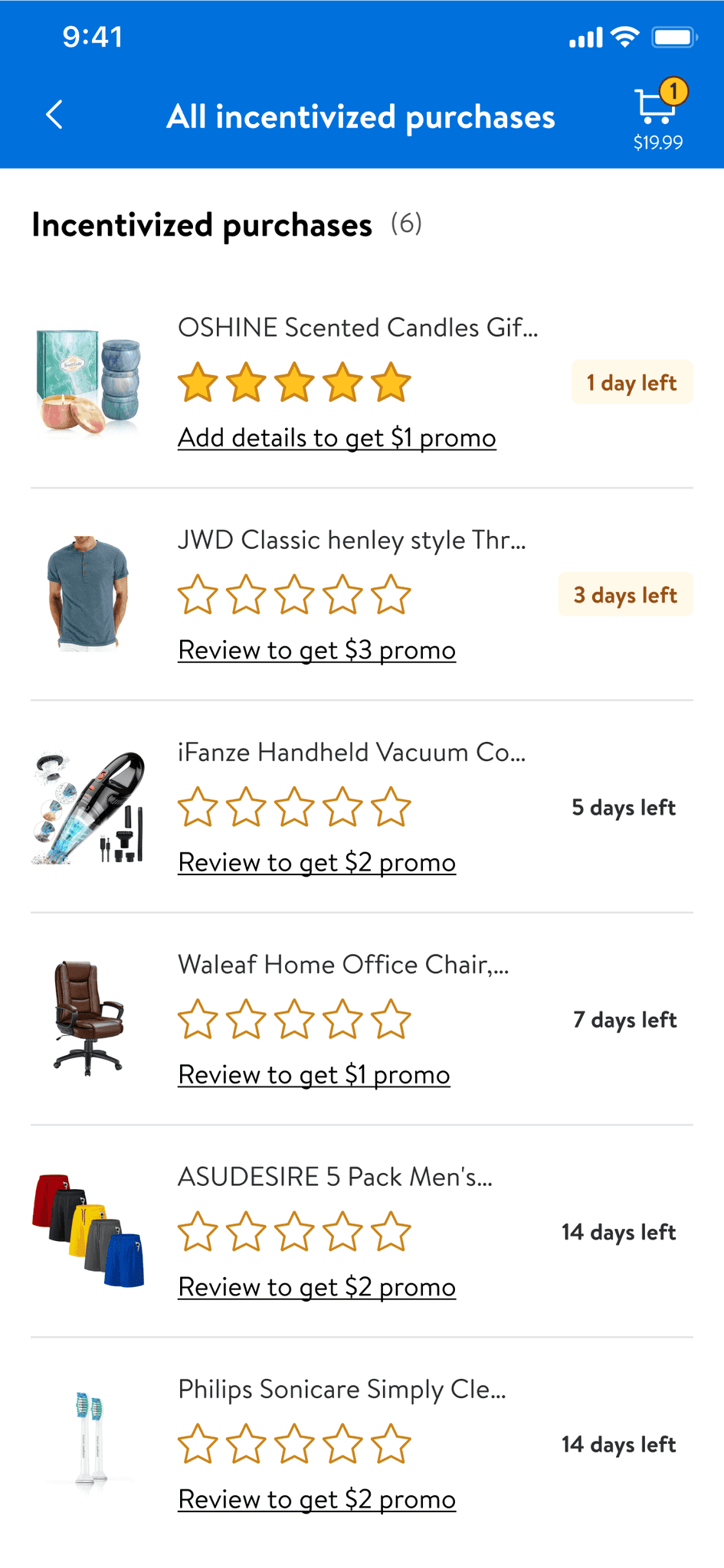
make it fun
Users can view all reviewable items and sellers in one place.
why it matters
Reduces friction, making it simple and more appealing for users to review.
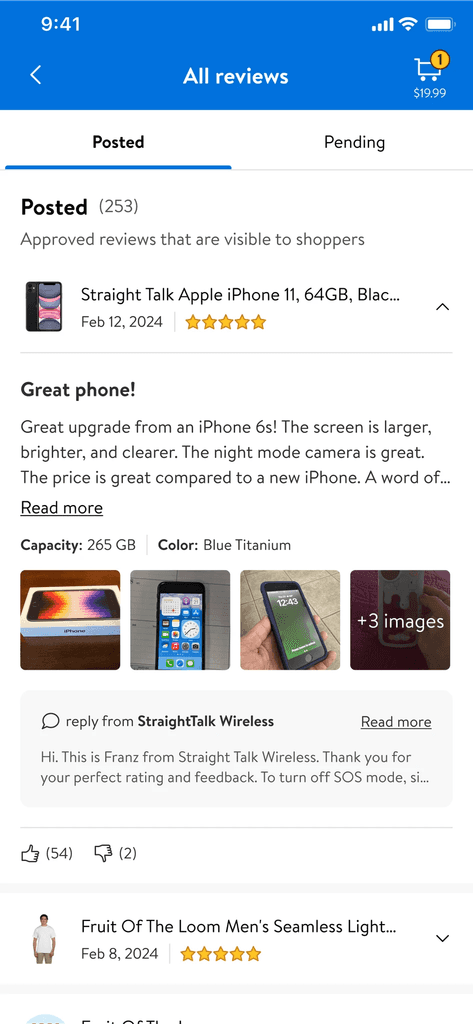
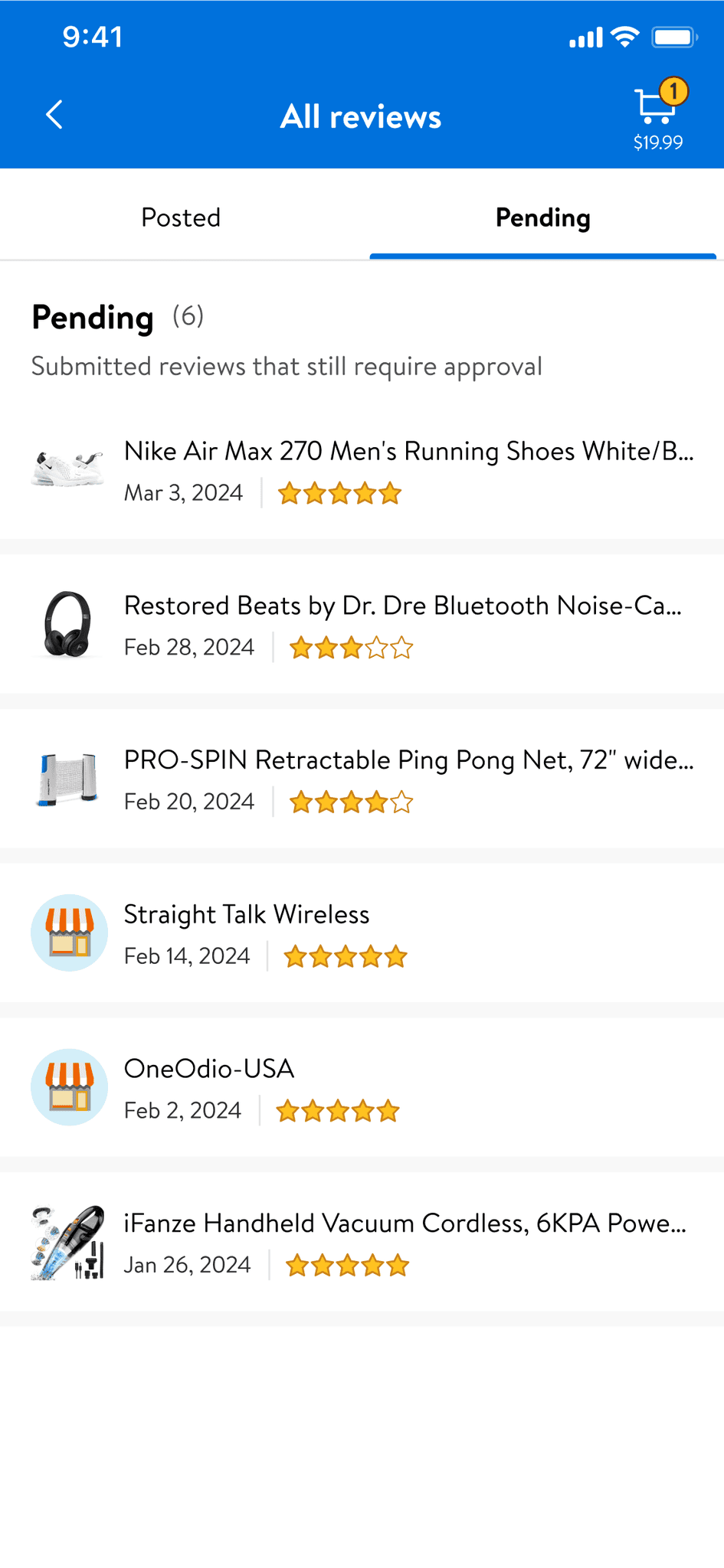
All reviews
Users have easy access to all their reviews in one centralized location.
feel my value & Create transparency
Highlight thumbs up on reviews and provide a "Pending" tab for reviews awaiting moderation.
why it matters
Visible impact and transparency motivate users to engage more often and leave better reviews.
Reviewer Profile
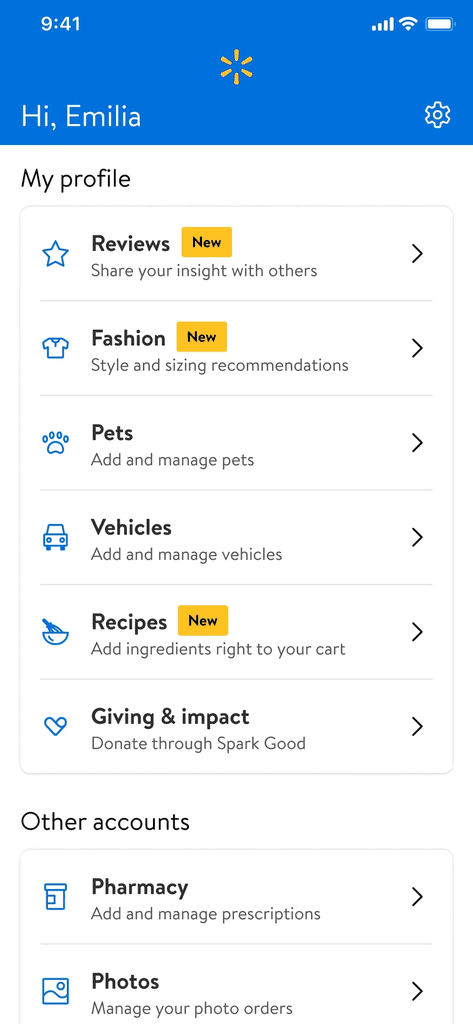
The profile centralizes activity, offering users clarity, easy access, and a sense of accomplishment through visible contributions.
entry point
Dashboard
dashboard cont.
all incentivized
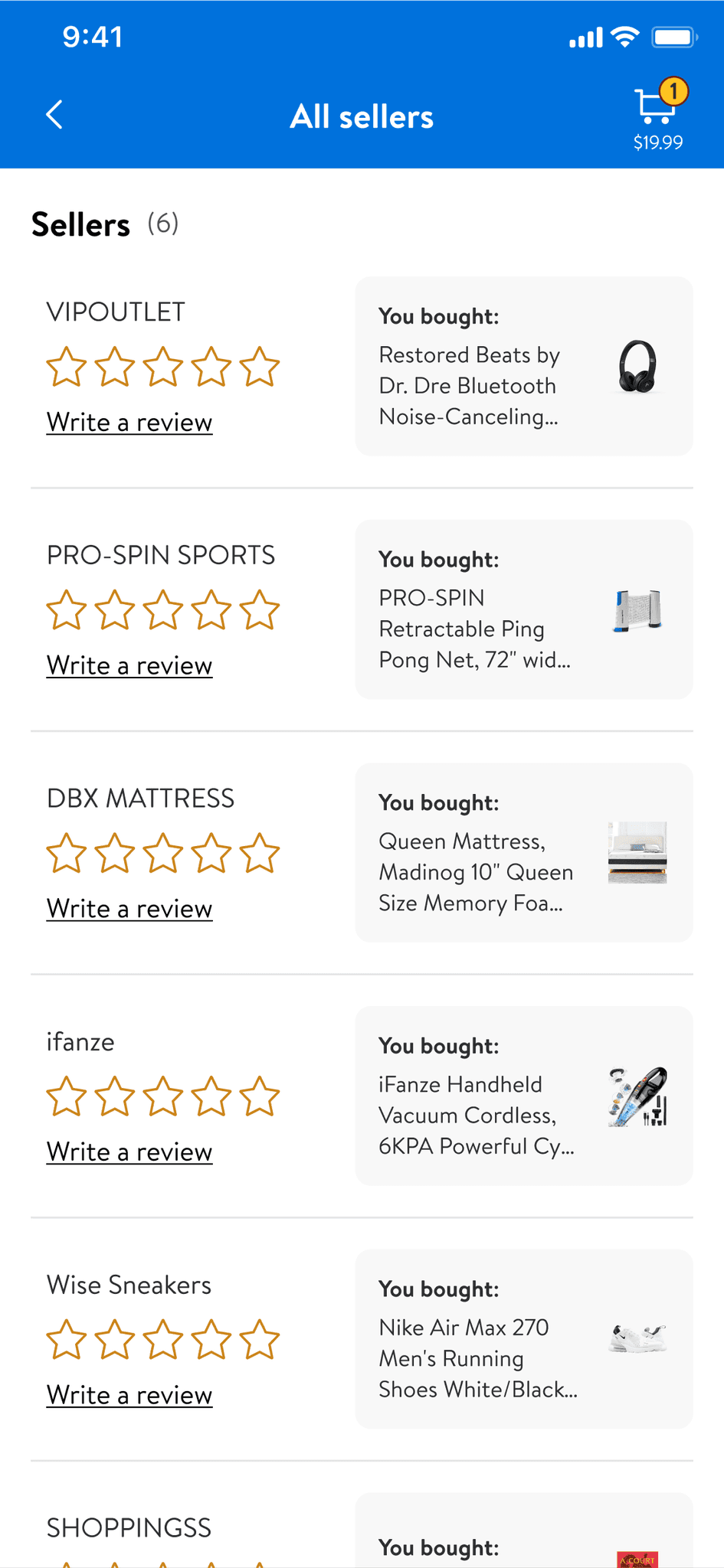
all items
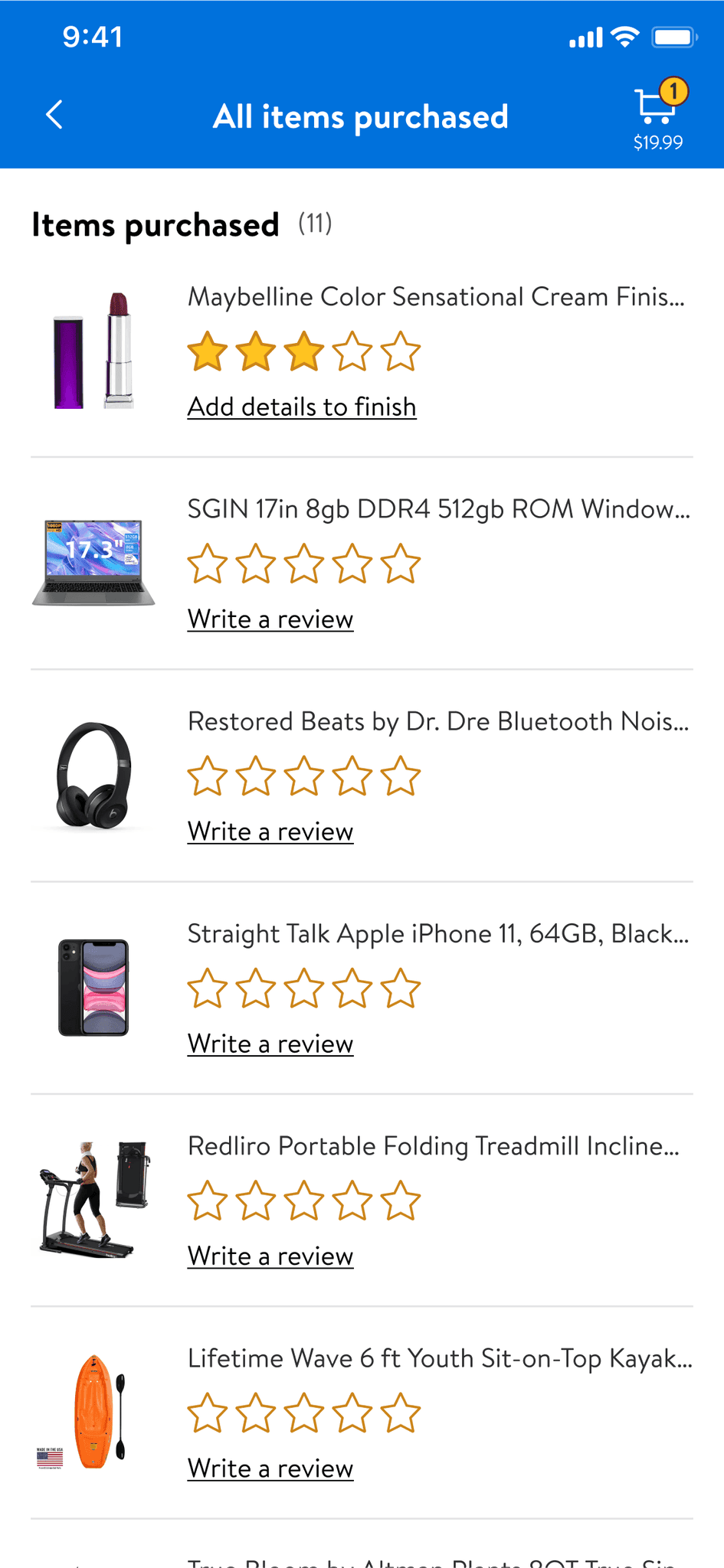
all sellers
posted reviews
pending reviews
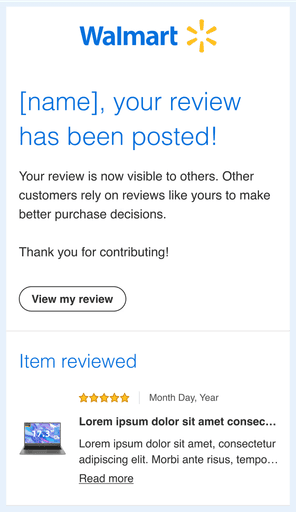
Communications
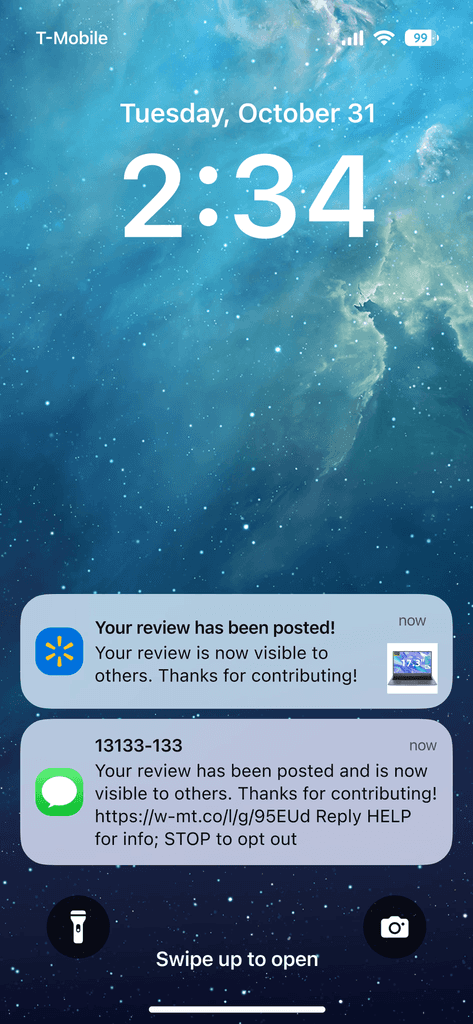
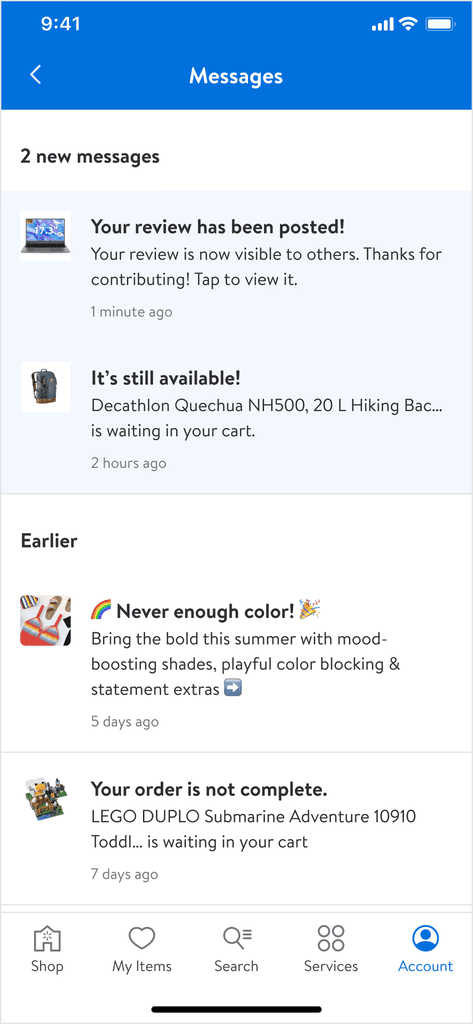
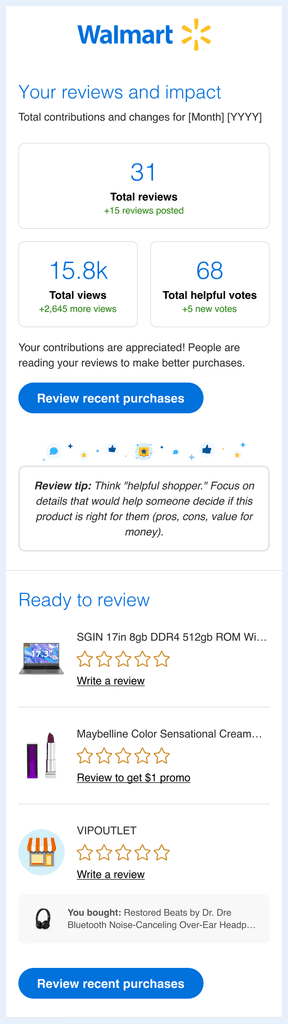
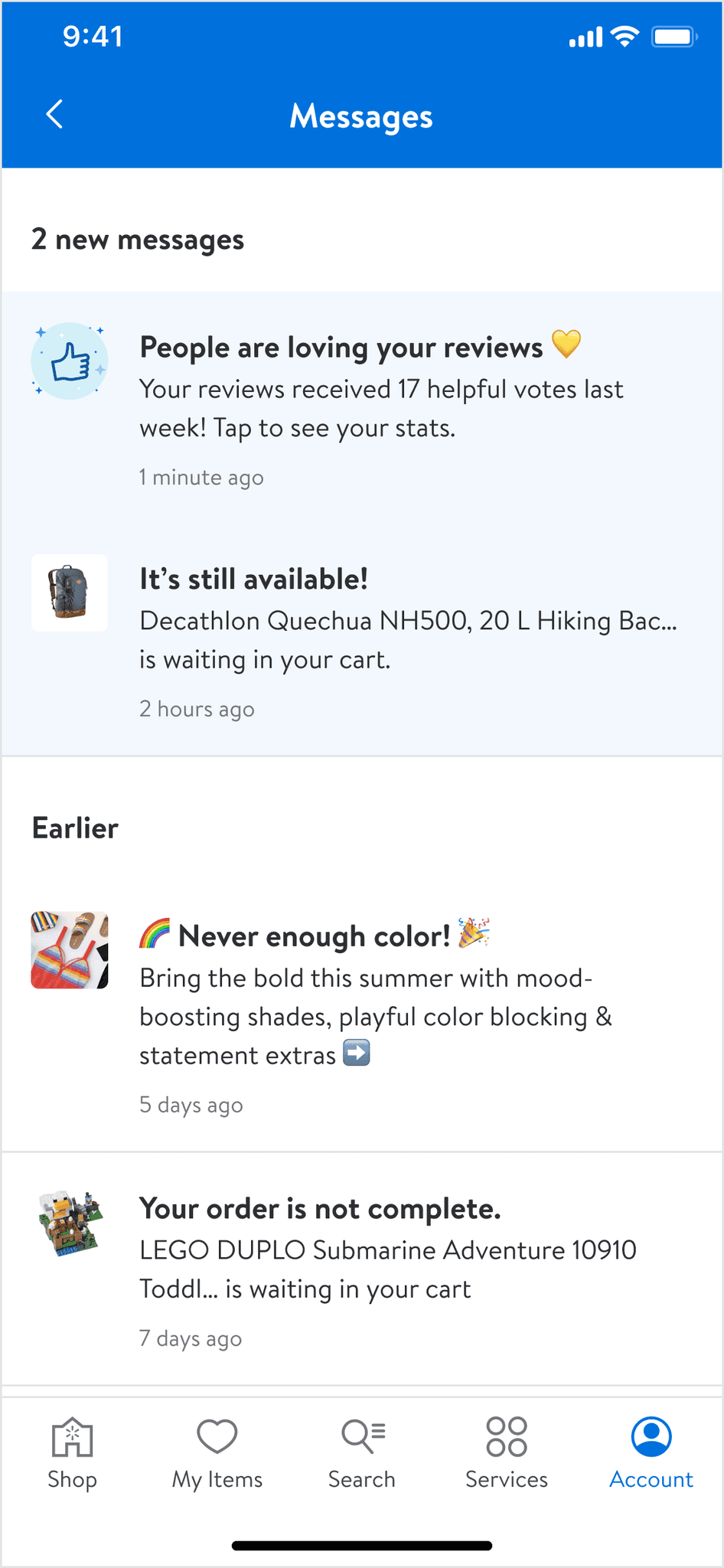
Push notifications and email updates ensure users stay engaged by highlighting their review impact, fostering a sense of contribution and trust.
Dashboard
points system
how to earn
sampling - level 1
sampling - level 2
impact
The results
The Reviewer Profile exceeded expectations, delivering strong results without promotional campaigns.
The initial plan included an impact module, but to avoid delays, I advocated for launching the core experience first, ensuring a centralized review hub was available before holiday shopping. This allowed us to gather early insights, refine iterations, and drive engagement, validating the need for a centralized review space while enabling future enhancements.
SUBMISSION rate
engagement rate
Submissions
REVIEWS/WEEK
What I learned from this project
Centralized solutions drive organic engagement
The centralized profile addressed unmet user needs, driving organic engagement and reinforcing the value of simplified access.
Cross-team alignment creates holistic solutions
Cross-team collaboration unified the Reviewer Profile and Sampling Program, aligning goals to create cohesive and impactful designs.
Proactive alignment with leadership ensures smoother execution
Engaging leadership earlier could have aligned expectations and prevented last-minute pivots, emphasizing stakeholder involvement.
Strategic prioritization accelerates impact
Removing features enabled a faster launch, generating impact and valuable data while emphasizing prioritization under time constraints.